

Working longer isn’t always the way to get your business back on track. Business owner burnout can mean ongoing exhaustion, less interest in work and a drop in performance. Overcoming business owner burnout starts with reducing the pressure, including by handing over work and making room to rest.
When you’re carrying too much, it can feel easier to keep pushing than to let go. But you don’t have to do every task yourself, and stepping back doesn’t mean you care less about your business.
This guide explains what can contribute to burnout and how to recognise its effects. You’ll find practical ways to delegate, set boundaries and build a support network, creating more space to recover and lead your business.
Key Takeaways
- Give capable team members clear ownership of tasks, then use regular check-ins to keep work moving without taking it back.
- Protect time away from work by setting boundaries and making rest part of your routine.
- Build a circle of trusted personal and professional support to help you work through challenges and consider new directions.
- When business pressures keep you stuck in the day-to-day, business advisory support can help you review your strategy and sales priorities.
1. Delegating leadership and stepping away from day-to-day work
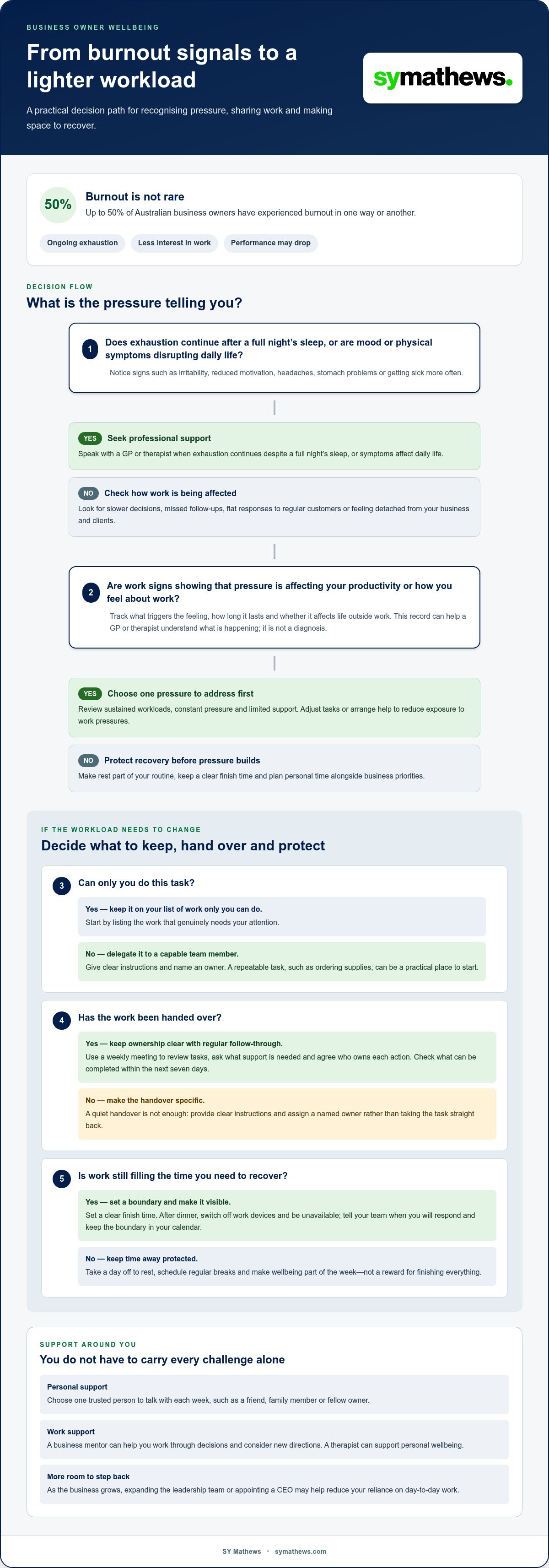
Burnout can reduce your performance and efficiency at work. It may also leave you feeling detached from your business and clients. Missed follow-ups, slower decisions and flat responses to regular customers can be signs that pressure is affecting productivity and how you feel about work.
For a practical start, take a day off to rest, then list the work only you can do. Delegate other tasks to capable team members and set a clear finish time each day. These steps can reduce reactive work and create space to recover.
Consider Jessie, a cafe owner working from 6 am to 9 pm. That schedule leaves little room for meals, family or recovery. Start by handing over one repeatable task, such as ordering supplies, with clear instructions and a named owner.
Delegation takes follow-through, not just a quiet handover. Use a weekly meeting to review assigned tasks and ask what support is needed to complete outstanding work within the next seven days. Agree who owns each action, then hold people accountable for the tasks they accept.
After dinner, switch off work devices and be unavailable. An issue that feels urgent at night may be resolved just as effectively the next morning. Keep this boundary visible in your calendar and tell your team when you’ll respond.
Long hours can strain relationships as well as business results. Mark Zweig has said that overcommitting to work contributed to two of his failed marriages. Saying no to extra commitments can protect personal time, restore a sense of control and make work-life balance more achievable.
As your business grows, expanding the leadership team or appointing a CEO may help you step back from day-to-day work. Ask leaders for support and delegate tasks that no longer need to be your focus.
2. Building a personal and professional support network
Running a business can leave little room for relationships, rest and interests outside work. Choose one trusted person to talk with each week, such as a friend, family member or fellow owner. A business mentor can help you work through decisions, while personal support gives you space to speak openly about how you’re feeling.
In Australia, you can seek support from a therapist for personal wellbeing or a business mentor for work challenges. Trusted advisers can help you consider new directions, whether you’re growing, running or winding up your business. If exhaustion continues despite a full night’s sleep, or mood and physical symptoms disrupt daily life, seek professional support.
Make wellbeing part of your schedule, not a reward for finishing everything. Block personal time in your calendar, plan a weekend retreat or consider a two-week holiday to rest. A simple weekly plan can include business priorities, family commitments and downtime, so one area doesn’t quietly take over.
Set a clear finish time and protect regular breaks. Arrange nourishing activities with people you enjoy, such as dinner with a friend or a walk together. Exercise can start with a 30-minute run or a strength-training session at the gym. These routines support recovery, but they also help you notice whether business success still leaves room for personal fulfilment.
Material success and wellbeing aren’t the same. Ask yourself what a good week should include beyond sales or growth, then schedule an activity that reflects that value. If stress keeps disrupting sleep, relationships or your ability to work, speak with a therapist or trusted adviser rather than carrying it alone.
3. Definition and causes of business owner burnout
Burnout is exhaustion and loss of interest in daily work, often followed by poorer performance. Prolonged stress and constant pressure to meet a standard can contribute. Up to 50% of Australian business owners have experienced burnout in one way or another.
Signs of burnout may include exhaustion that lasts beyond a full night’s sleep, reduced motivation, irritability and difficulty enjoying familiar tasks. Headaches, stomach problems or getting sick more often can also be signs. At work, notice whether decisions are slowing down or you feel detached from clients.
Stress and burnout aren’t interchangeable labels. Track what triggers the feeling, how long it lasts and whether it affects your life outside work. For example, note whether exhaustion centres on business tasks or also affects time with friends and everyday activities. This record can give a GP or therapist a clearer picture, but it doesn’t diagnose the cause.
For Australian workplace health and safety, owners managing psychosocial risks should identify work pressures, consider their effects on people and act to reduce exposure. Review sustained workloads, constant pressure and limited support, then adjust tasks or provide help. Work demands can affect employees as well as owners.
Starting, running and growing a business can drain your time, energy, relationships and finances. Money stress and poor mental health can affect each other, adding pressure to an already demanding workload. A practical approach to overcoming business owner burnout starts with spotting the pattern, identifying its work-related causes and choosing one pressure to address first.
Explore practical business advice
SY Mathews: Business advisory services
SY Mathews offers business advisory services for owners who need to reduce day-to-day reliance on themselves. Its structured 13-week program is designed around four specific business objectives, focusing on improving sales and margins while relieving owner dependency.
If business pressures keep you stuck in daily tasks, advisory support can help you review priorities and decide where to make changes. Strategy and sales and marketing services can help clarify your business direction, while motivation and accountability can support follow-through. This is business-focused support, not treatment for mental health symptoms. Seek appropriate professional care if symptoms are affecting your wellbeing.
Visit symathews.com to explore whether its business advisory services fit your next steps.
Make your next step a manageable one
Your next move doesn’t need to be a grand reset. Choose one change you can sustain this week, then notice what it makes possible: more time, clearer focus or room to make decisions. A small shift can help you build a steadier way of working instead of waiting for the pressure to disappear.
A practical approach to overcoming business owner burnout can include business changes as well as personal support. SY Mathews offers business advisory services, strategy, and sales and marketing services to help owners work through business priorities. If pressure is affecting your mental health, keep professional wellbeing support in the picture too.
Take the next step at your own pace. A more sustainable way to run your business can start with one clear decision.
Frequently Asked Questions
What is Burnout?
Burnout is a work-related state of prolonged exhaustion that can affect your motivation, mood and ability to function at work. It may show up as difficulty making routine decisions, feeling detached from clients or losing interest in tasks you once enjoyed. Stress and depression can overlap with these experiences, so a GP or mental health professional can help assess what’s happening.
How can small-business owners reduce workload and delegate effectively?
Start by listing recurring tasks, then mark which need your expertise and which someone else can own. For example, document the steps for preparing a regular customer update, assign it to a team member and agree on what a finished update looks like. Review the handover after the first attempt, clarify any gaps and adjust the process instead of automatically taking the task back.
What are the risks of continuing to run a business while experiencing burnout?
Continuing without addressing burnout can make it harder to concentrate, make sound decisions and respond well to clients or staff. Ongoing pressure may also strain personal relationships and make recovery more difficult. If exhaustion or low mood is affecting daily life, speak with a GP or mental health professional. If business demands are driving the strain, review the workload and support around you.

Article by
Sy Mathews
Sy Mathews is practical, down-to-earth and hands-on. He has owned and run businesses in Sydney and Melbourne at various times over the last fifty years, created, operated and sold them to larger companies in tourism, logistics, aviation, he understand the 'hands-on' of business ownership and the challenges it presents. He is motivated to assist owners to get out from under the burden of running and owning, into the freedom that independent business owners deserve to enjoy.
General information
Our articles are intended as general information. I personally work on-site with clients to provide tailored solutions specifically for the business.
I do not offer financial, investment or legal advice. If required, I can assist in recommending professionals in those areas. I take no fees or commissions from third parties, my recommendations are authentic and carry no hidden costs.


